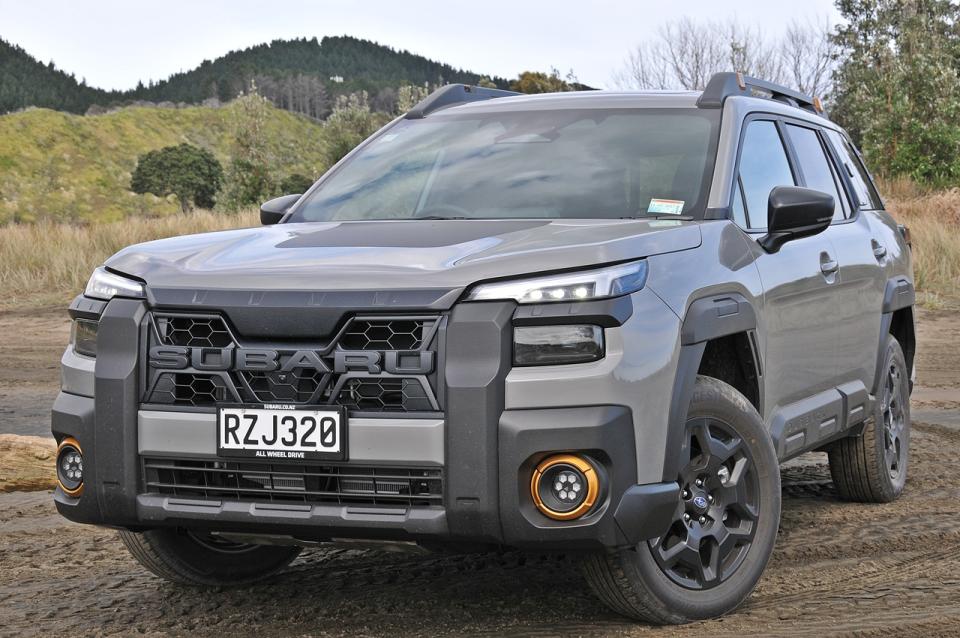
It impressed at launch, and with a week-long drive, nothing has changed. The 2026 Subaru Outback Wilderness is a rugged, off-roady midsize SUV that capably balances everyday road comfort and family-friendly practicality with excellent trail capability.
It’s based on the seventh-generation Outback, which arrived with a stiffer chassis, retuned steering, and more cargo area: a genuinely good platform. Subaru completely redesigned the 2026 Outback from the wheels up, shifting it toward a more traditional SUV silhouette. Height and width are increased, the nose is more upright, and the styling gives the Outback a more confident and assertive presence on the road. Revised LED headlights and tail lamps modernise the appearance while improving visibility.
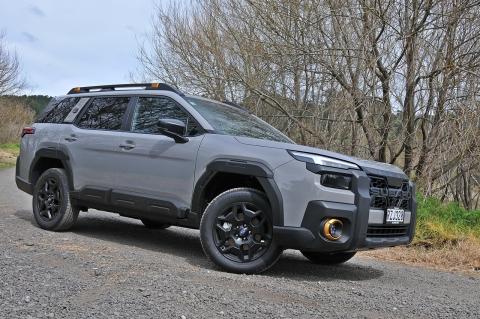
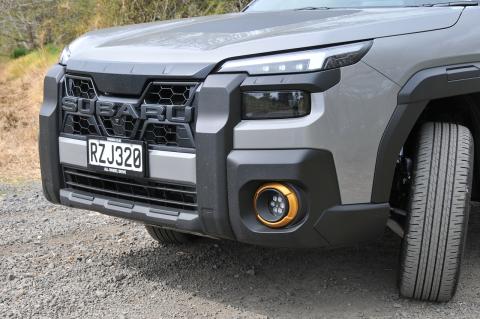
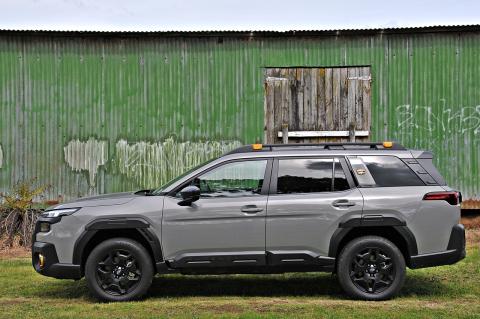
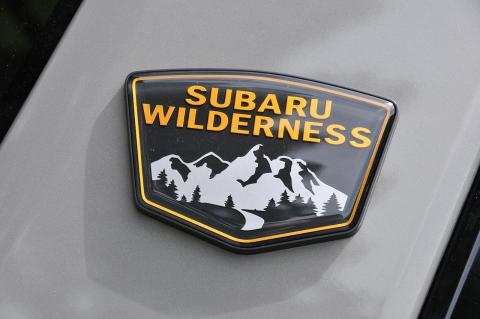
So the Wilderness? It stands out: in a segment where every crossover and CUV/SUV looks like a variation on every other similar product, the Wilderness is unmistakeably the Wilderness.
It’s come from America, this spec, and it’s a welcome addition to the Outback family. Here, Outback has been Subaru’s best-seller for years. It started in the mid-1990s as a lifted Legacy wagon, and has progressively evolved into a more offroad-able SUV over subsequent generations.
New Zealand gets a two-model range: the $69,990 AWD Wilderness and the $74,990 AWD Wilderness Apex. Both run a 2.4-litre flat four turbo engine making 194kW, well up on the stock Outback’s 137kW. Torque is 382NmThe transmission is Subaru’s Lineartronic CVT, backed by a dual-mode version of the company’s the X-mode offroad software.
There’s hill descent control too, in common with almost all SUV offerings that are actually intended to go offroad.
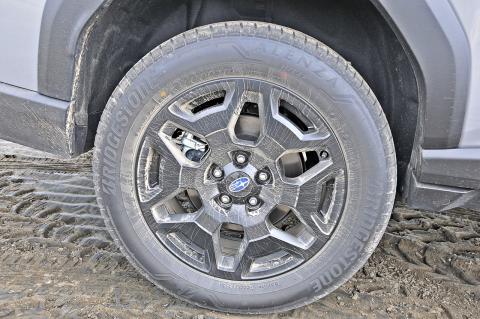
Overseas, Wilderness has 17-inch alloy wheels; our had 18s running 225/60x18 Bridgestone Alenza tyres.
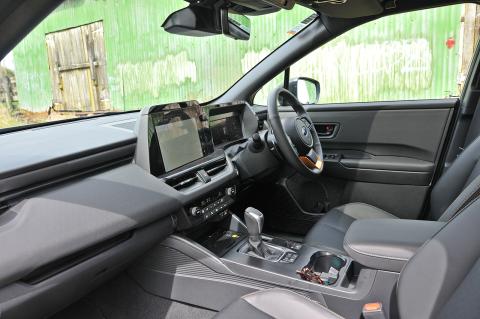
Inside, the biggest win isn’t the new 12.1-inch horizontal screen but rather the return of physical knobs for climate control and other key functions, which really matters. The 2026 Subaru Outback Wilderness not only has well placed steering wheel controls, but dedicated dials for temperature and fan speed and a big volume knob. Maybe safety organisations were the key to this shift away from ‘screen for everything’ functionality, or maybe designers are listening to feedback from motorists, but the switch back to switches is very welcome.
The main screen in front of the driver is 12.3-inch.
The seats are finished in synthetic leather, and the fronts are grippy enough to safely hold occupants during the pitch and thump of offroad adventuring. The front and outside rear seats are heated, imp0ortant in parts of New Zealand that get bitter winter weather.
Small details reveal how much thought has gone into the gen. seven Wilderness. The door pockets are carpeted and wide enough to take a 32-ounce Hydroflask without rattling around. On a supermarket run, neither feature stands out, but up on Klondyke Road, tracking through washboarding or over the remnants of recent slips, it’s appreciated. No rattle, no clatter.
Electronic adaptive suspension is a big deal. Shock absorbers that monitor body movement in real time and adjust continuously: firm on pavement to minimise body roll; then softer on a washboard trail to absorb the chatter that usually beats up high-clearance vehicles.
The key numbers are good: Outback’s 220mm ground clearance becomes 240mm for the Wilderness. Approach angle is 23.5 degrees, departure angle is 25.5 degrees, ramp-over is 21 degrees. That’s well ahead of most of the segment’s market leaders, which have turned emphatically toward their predominantly tarmac-based uses.
Beyond those numbers, the real limit is suspension articulation, because independent suspension means a wheel lifts sooner than it would on a body-on-frame rig and the driver is then relying on X-Mode’s torque management rather than mechanical flex to keep moving. It’s a relatively minor aspect of the vehicle’s performance, and frankly if the trade-off is greater comfort and road-holding on tarmac or gravel, we’re happy enough.
The Wilderness is right at the front of the category for roadholding and comfort on any surface.
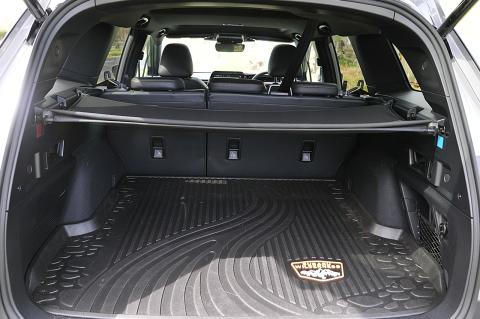
Vehicles in the medium SUV/CUV class are not often built for towing, but Wilderness has a braked towing capacity of 2,100kg. We’d be more inclined to use the interior cargo capacity and add a roof box for big trips. Those roof rails have a decent 100kg capacity.
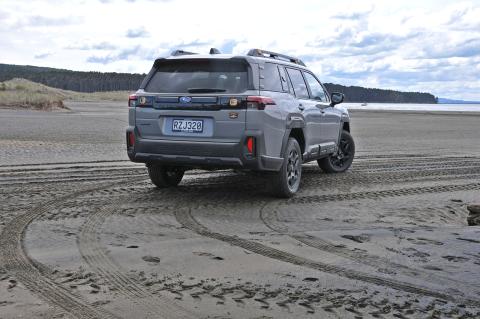
On-road, the Wilderness drives much like other mid-size crossover SUVs. Off-road, it’s better than that. Much better. The engine is supremely tractable at low- to midrange speeds. Crawling across loose dirt or sand, the combination of long pedal travel and plentiful torque made driving precision easy in the Wilderness, and the same would likely be true when dealing with the fresh-but-slushy snow that ski-mad Subaru owners will regularly deal with.
The Wilderness’s steering is well weighted and communicative in the sort of need-to-know basis common to modern power assistance: What it’s not telling, the driver probably doesn’t need to know. The Wilderness actually gets a slightly quicker 13.0:1 steering ratio compared to the regular Outback’s 13.5:1, so reactions are a little quicker.
For low-speed off-roading, the Wilderness can operate in either of two X-mode drive programs—one for snow and dirt and one for deep snow and mud.
Conclusion
With its excellent all-wheel-drive system and reputation for reliable performance when the weather turns bad, there’s arguably no direct substitute for a Subaru. Outback works better than others in this respect, and the Outback Wilderness is clearly more capable than other Outbacks
In America, Subaru has profiled the typical Wilderness buyer: a person under 40 who loves outdoor activities like off-roading and physical activities like kayaking, skiing, or hiking with their dogs. They love to road trip (with their dogs, naturally) and play music too loud. They’re passionate about wildlife, nature, and the environment.
Most of that would seem to apply to Kiwis, though we suggest two additions/amendments: we’d definitely add a strong family theme, and we’d suggest the age-band is a bit wider. Say, 38-48.
 ,
,  ,
,  ,
,  ,
,  ,
,  ,
,  ,
,