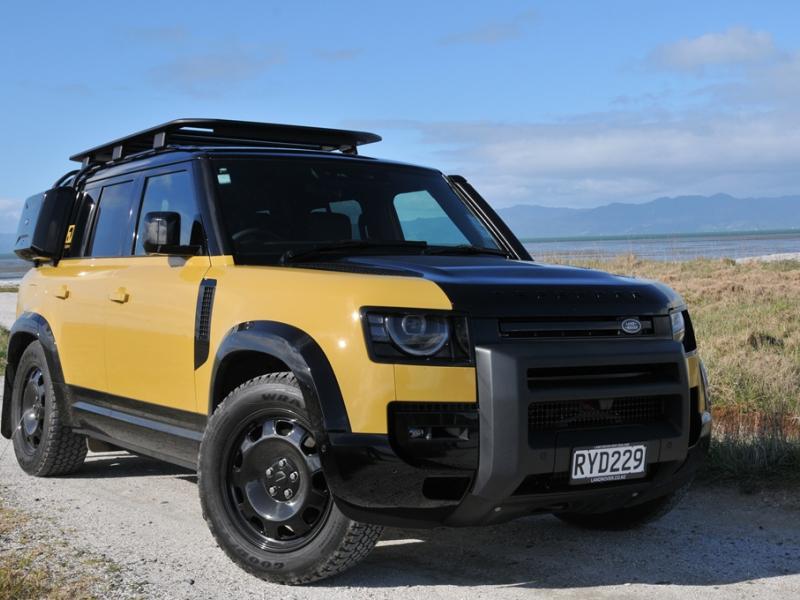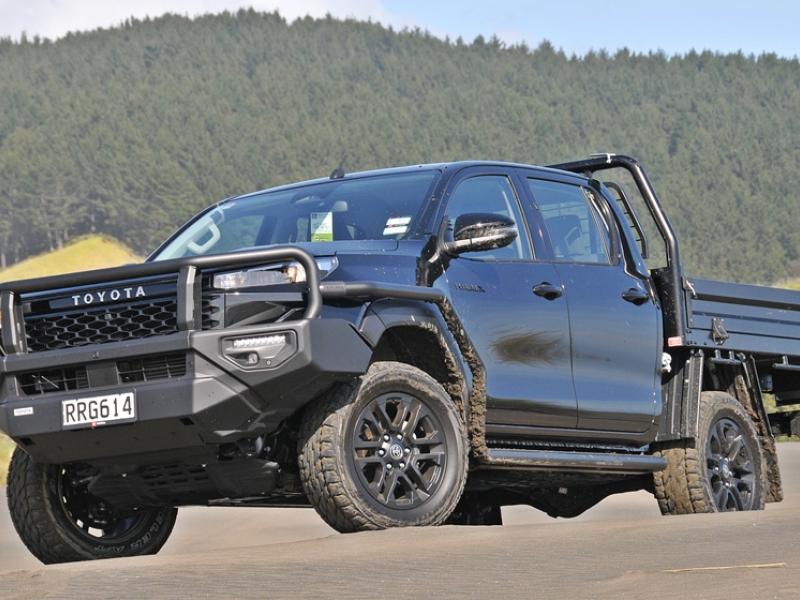
A week in a modern SUV is quite revelatory after spending a lot of time in 4WD utes.
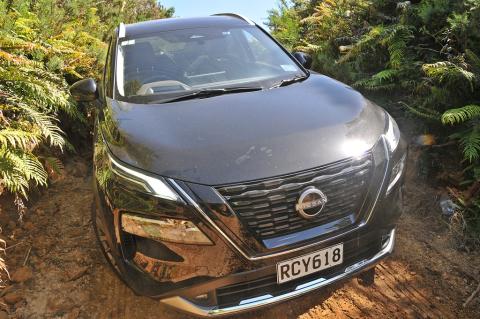
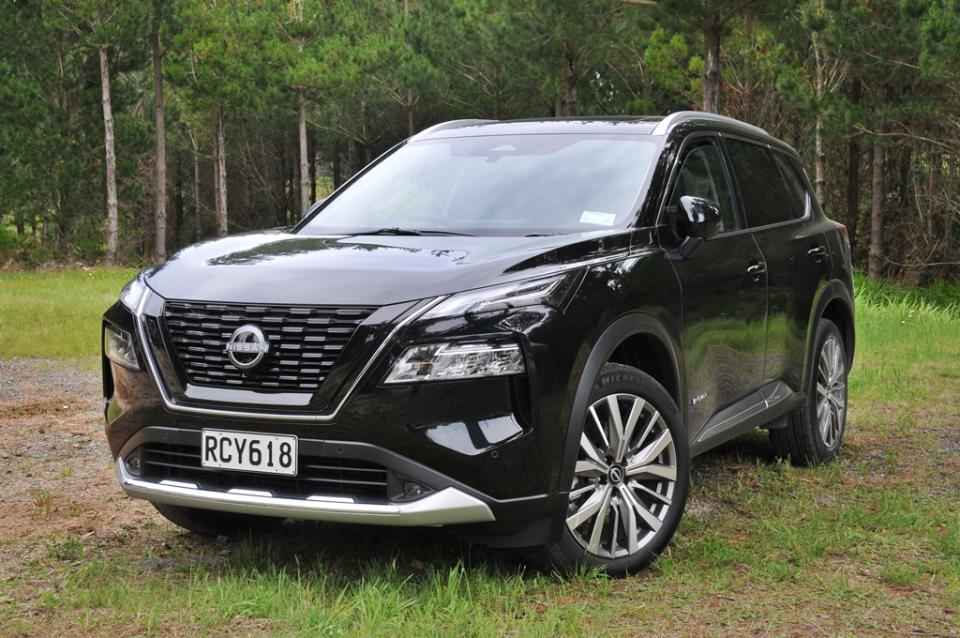
We’re in the top-of-the-line Nissan X-Trail Ti-L: 1.5-litre three cylinder engine, hybrid drive, e-Power CVT transmission and intelligent AWD, riding on 20-inch alloy wheels and low-profile road tyres. Not long ago we named the X-Trail our medium SUV of the year, and this would be a chance to re-acquaint ourselves with the model in a week of activity that closely aligned with how buyers might use the SUV.
The third-generation X-Trail (T32) arrived here in 2014, and marked a significant switch to an urban ‘crossover’ design style. It was replaced by the current T33 in 2021 and the change ushered in a strong push toward hybrid powertrains. Much more urban-oriented than the early generations, the T33 remains well capable of gravel road adventuring, ski trips and the like.
Today, X-Trail is one of the most common mid-size SUVs on the used market.
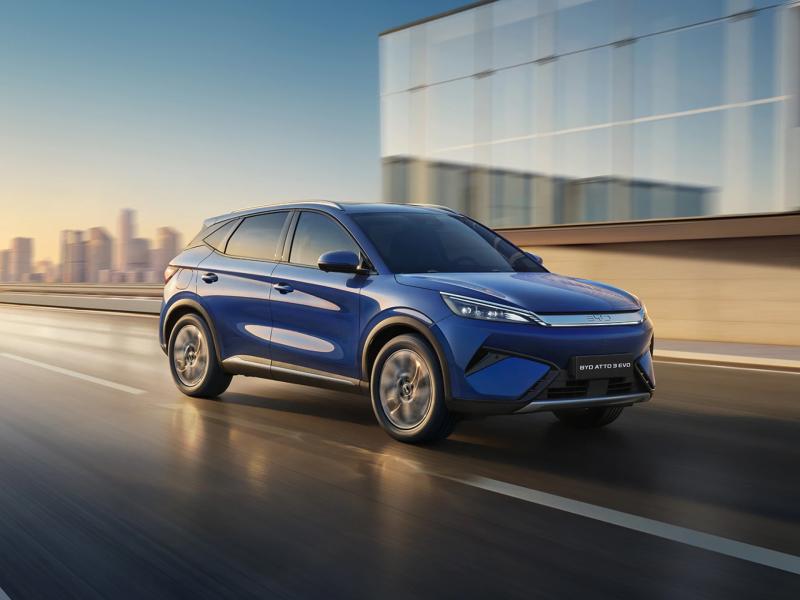
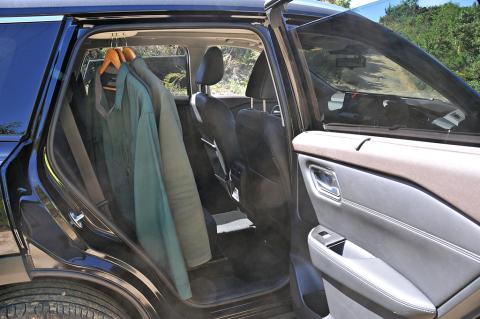
The exterior is thoroughly modern and shares a family look with other Nissan SUVs, including the Pathfinder and even Y62 Patrol. Both Pathfinder and Patrol are older and more bluff-fronted than X-Trail though, so it’s probable that this vehicle points the way forward for Nissan’s medium-large SUV styling. Notably, the front end has an appealing ‘edgy’ look to it, with narrow headlights in the ‘design language’ of many modern SUVs. Where brands building EV SUVs often seem determined to hit them hard with an ugly stick at the design phase, the X-Trail has a wholeness to its exterior that is pleasing to the eye. It has ‘clamshell’ doors in current SUV style – I like them because if the vehicle’s been out in muck and mud, the doors keep the worst of it away from trousers when entering of exiting the vehicle.
The interior is world class. It does draw heavily on the Nissan parts bin for switchgear and the like, but the design as a whole is emphatically X-Trail. The centre infoscreen is landscape in format and easy to use.
The driver’s display includes a ‘speedo’ and a digital speed display alongside an energy flow meter that shows when the engine is helping the battery to drive the car or when it’s battery only and even when the car is decelerating and the regeneration system is recharging the battery. On that, there’s a console switch for EV-only mode and one for e-pedal driving which significantly increases the car’s ability to charge itself when on a trailing throttle.
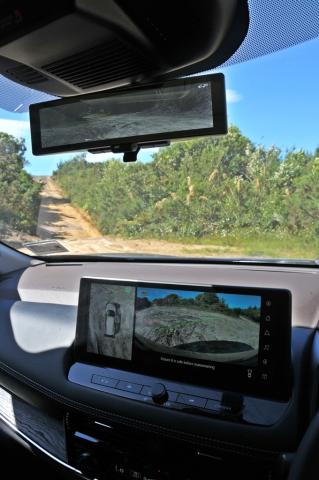
The around-view cameras are good on and off the road, helping keep grazes off the shiny bits and assisting wheel placement.
The front seats are in Nappa leather and are definitely long-trip-friendly. The memory driver’s seat has that luxury-car feature, sliding itself back to improve access/egress when the car’s switched off.
Other handy things inside include rear door sunshades, which help keep the sun at bay and are a privacy screen as well.
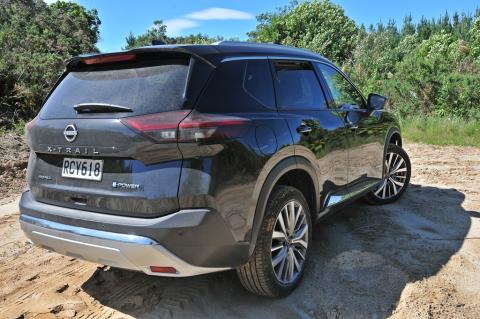
In the rear, there’s a good squared-off cargo space, but the space requirements of the hybrid battery are at least partly responsible for the absence of a spare tyre. Instead, there’s a tyre repair/reinflation kit. In the worst case, shred a tyre on road debris and it’s a trailer job to get the vehicle home.
The usual driver safety systems are wrapped into the Nissan Intelligent Mobility safety suite. They are less intrusive than in many 4WD utes. The SUV market often creates and refines technology that later drifts over to the ute market, hopefully this will be true when it comes to refining driver ‘assists’ so they actually do assist the driver.
So, out early and on the road, a trip to the Bay of Plenty to support a youth event staged by my brother and mates at Waikato Offroad Racing Club. What’s TECT Park? It’s a unique area of pine forest, tracks and trails run by a trust where all sorts of outdoor activities co-exist. Orienteering, mountainbiking, paintball, camping, rallying, offroad racing, motorbike events and more. Superb, and best of all it has no neighbours complaining about noise or dust. Never will.
The road’s fairly clear down into the Waikato, and the X-Trail sits happily at 110km/h on State Highway 1.When we drop onto 100km/h roads – the ones Labour thought should really be 80km/h at best – the X-Trail’s SUV body style gives great visibility over the roof of each car in front, and of the road beyond the next corner.
It’s times like these – stuck behind a huge John Deere tractor towing a hay-baler – that the excellent ten-speaker Bose sound system gets a thrashing. A devout Luddite, I have only recently caved in to the technology naggings of ‘these days’ and begun compiling playlists (Apple, not Spotify) but have also been filling up my phone’s available memory with favourite albums, so X-Trail got exposed to some fairly alternative sounds.
In the early sections of the drive, I had travelled with the sunroof open. Light traffic and B-roads across the Hauraki Plains blended with the aroma of grass drying in the fields. Over the Kaimai ranges and on the run down to Pye’s Pa, the temperature was ramping up to the high 20s so the sunroof gave way to just roof.
X-Trail’s very much a road-going SUV, and its 255/45 tyres are perfect for a trip like this – and for gentle gravel-road work.
After a day photographing the racing at TECT Park, I got the chance to drive out into the surrounding trails and see what the X-Trail was like on the area’s classic volcanic trails. The chassis and suspension do a good job of communicating what the tyres are doing, as any unitary bodied SUV should. There’s early warning when a tyre is losing grip, and clear indication through the seat and steering wheel of which tyre it is.
Unless the trail is quite rough, the X-Trail is well capable of doing some offroad exploring. Its overhangs do limit activity in rough going, as do the stylish 20-inch wheels and their low-profile road tyres, but for intelligent AWD and weekend warrior work – to the beach or the bush, up gravel roads where the AWD is invaluable – the X-Trail is a useful medium SUV. It will certainly do everything the class sales leader can do, and though it’s no feather-weight at 1675kg, that hybrid system endows X-Trail with great real-world range.
The X-Trail is powered by a 1.5L three-cylinder engine that makes 157kW of power at 4500 rpm and 525Nm of torque. Nissan claims it uses 6.1L/100km and produces 139g of CO2. It has a 55L fuel tank, meaning it should be able to travel 902km per full tank. On a slow noodling cruise on urban streets and the motorway, we got it down to 5.6l/100km. Our trip to TECT Park and back was a bit more push-on, and returned 7.1l/100km. So Nissan’s figure seems pretty much spot-on. And the eerie feeling of driving down the Kaimais on battery power alone, watching the system recharge the battery as we went, was priceless.
 ,
,  ,
,