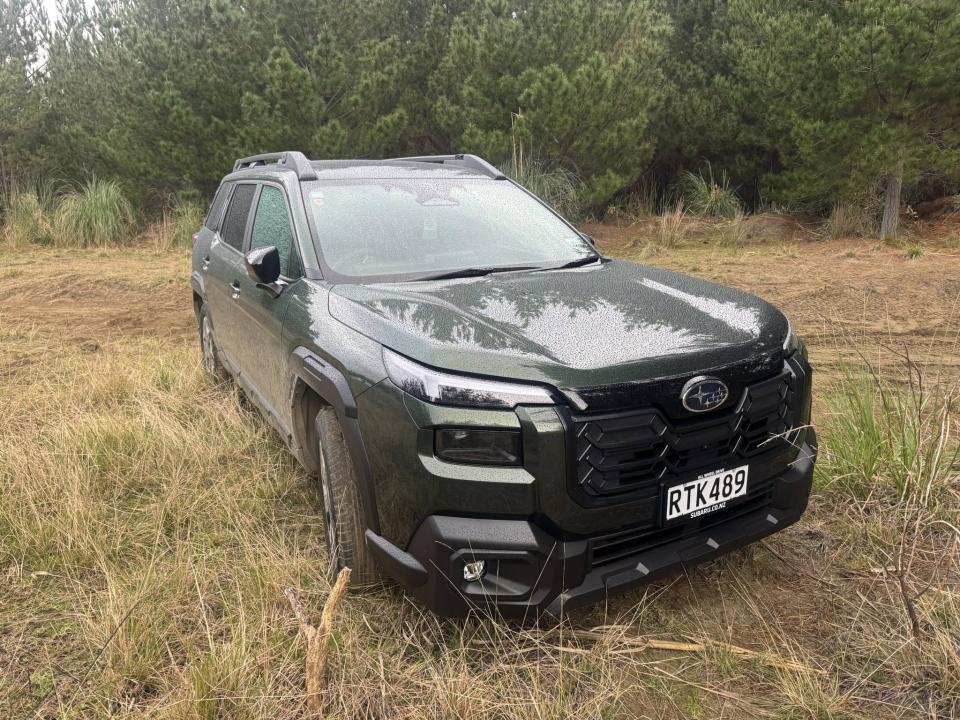
The Subaru Outback is the company’s best seller, and with good reason.
This is a vehicle that appeals to the pragmatic sensibilities of family car buyers and fleet customers alike.
The Outback was originally based on a Legacy wagon with different bumpers and raised suspension, and it sold well from the start.
We drove the stock Outback and the tougher-looking Wilderness version at the local launch and came away well impressed.
Now, we’ve had a longer drive
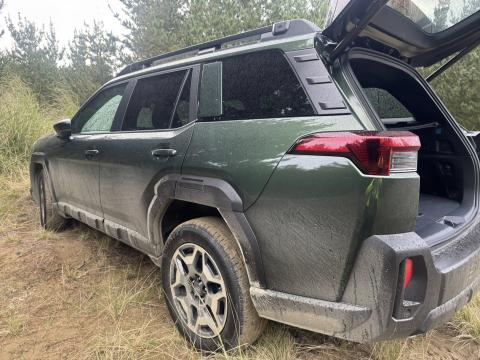
Outback has become less a svelte wagon and more a boxier SUV-like vehicle in response to global demand for ‘SUV everything’. In this seventh generation, Subaru has created a vice-free, urban oriented vehicle that is easy to live with yet thanks to its X-mode adventuring transmission system it far more offroad capable than almost any rival unibody SUV.
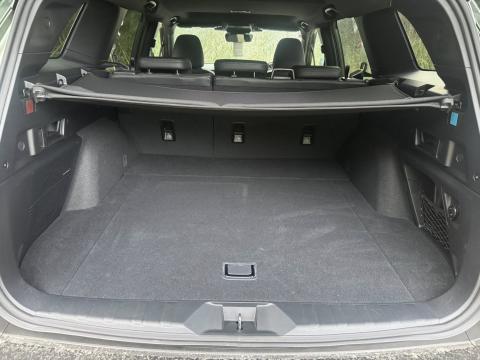
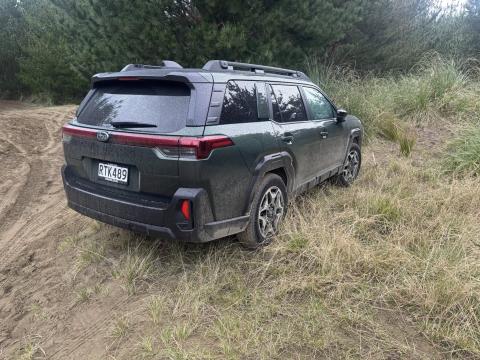
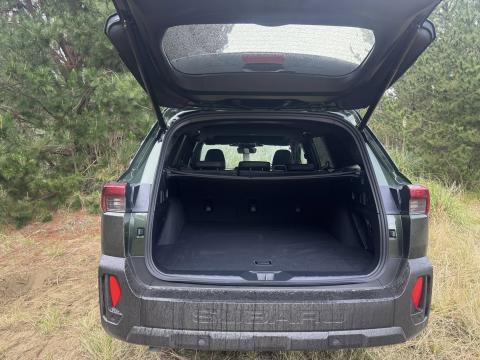
The vehicle’s dimensions are marginally lengthened. Most of the visual change is in the roofline height, which is increased 40mm. That further increases headroom and cargo space in the 530-litre boot.
In New Zealand, is offered in five grades make up the range three stock versions (Outback, Outback Premium and Outback Touring) featuring the naturally aspirated 2.5-litre four-cylinder (137kW/245Nm) and two Wilderness trims with a turbocharged 2.4-litre turbo making 194kW/382Nm. Both engines make their peak power quite high in the rev range: Outback at 5,800rpm and the Wilderness at 5,600rpm. Claimed fuel consumption is 8.1l/100km for the Outback and 9.7l/100km for the Wilderness.
All models use Subaru’s Lineartronic CVT transmission.
The suspension of the Outback has received a worthwhile upgrade.
The regular Outback has retuned passive dampers that are well up to the job on-road or off.
Outbacks have always set the standard for Subaru in terms of ride quality and this new Outback raises the standard further.
It is stunningly good over any surface.
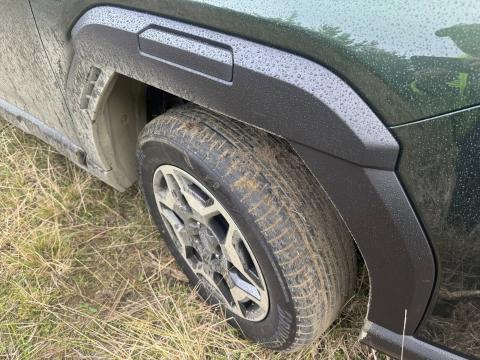
Out at Woodhill Forest northwest of Auckland, Subaru’s updated X-Mode AWD regulated traction very quickly on scrabbly logging road uphill ascents after recent rainfall and in the sand, the control systems get the job done remarkably well.
Tarmac ride quality is superior to any of the common ladder-frame wagons on the market.
For anyone whose driving will mainly be on sealed roads, the Outback is a better-handling, better-riding car than a traditional four-wheel drive.
Decent seat comfort, acceptable interior noise levels and mostly well-tuned adaptive safety systems also make it a relaxing car to pilot.
Inside
Auto manufacturers worldwide have bought into screen-based controls without considering the ned user. Screens are cool looking, cheap and trendy. Clever auto makers have now started to switch back to switches for the controls we most use when driving.
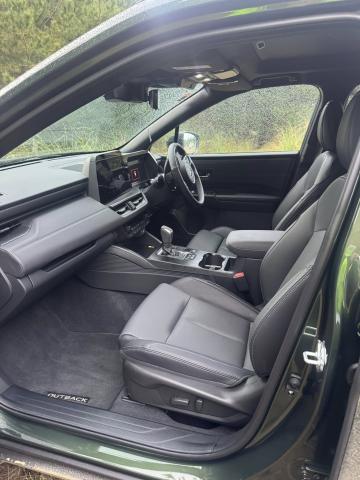
The new Outback is one of the best examples yet of the move away from screens and towards physical buttons for key functions.
That has resulted in an interior concept for the new Outback that better blends modern tech with the right number of real buttons. Drivers can memorise the location of knobs and buttons and deploy them without looking away from the road. Nobody can dive down through two or three layers of screen-based controls to do the same.
The Outback has a conventional horizontal 12.0-inch info display running a refreshed operating system.
Wireless Apple CarPlay worked flawlessly on our test, and we have to assume the same is true of Android Auto, which as iphone users we can’t access!
The instrument cluster is a new full-width 12-inch digital instrument cluster.
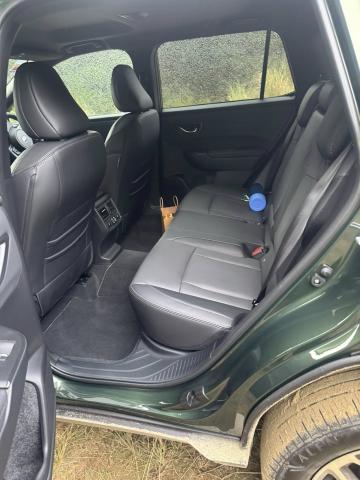
All Outback grades now have either vinyl or real leather seating.
The seats themselves are comfortable and high-mounted, offering a commanding, SUV-style driving position.
Storage space is plentiful front and rear and the back seat room is impressive, with superior legroom and headroom to many shorter midsize SUVs. Here’s one area where the Outback’s wagon roots still shine through: it’s a long vehicle at 4880mm.
In the 530L boot accessed through a standard power door is an interesting new cargo blind concept.
It’s not a sturdy hard piece; instead, buyers are given a soft cover that can be fixed at different positions to be a traditional blind, tailgate seat cover, or even a hammock for groceries.
The final verdict on the Subaru Outback
The Outback rides and handles with more distinction than the car it replaces, while also pushing off-road capability further than ever before. Achieving both goals simultaneously is difficult and speaks to the thought that has gone into the chassis engineering.
 ,
,  ,
,  ,
,  ,
,  ,
,  ,
,